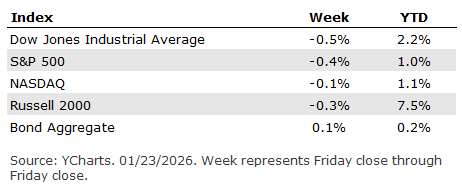
OutlookIn a dramatic one-day decline, the price of silver lost over -28% in value on Friday. The decline can be attributed to a variety of factors. For one, it was a "crowded trade" since its price rose over 50% in January alone. Second, the man slated to be the next Federal Reserve chair has historically been referred to as an "inflation hawk," which generally implies bad news for precious metal bulls. Another reason may have to do with a recent uptick in the dollar, which tends to lower the price of silver, and the like. There are a couple other decent reasons we could suggest, but the point is, there are other reasons, and none of them are big enough to infer we are on the verge of a major economic shift. In fact, our general view on the economy remains now as it has been since before silver's price drop: continued growth, reasonable inflation, and a leveling off of the dollar's decline. While it's possible the price of silver's sudden shift is telling us something we haven't identified yet, we have not seen any evidence of significant changes in economic perspective over the weekend, either. Either way, precious metals, like most commodities, can be volatile. Because they do not earn cash flows, it's more difficult to judge the valuation, and investors are left to speculate things like the state of the world, inflation, and other big-ticket items. Federal Reserve (FOMC) Update1 The Federal Reserve held the federal funds rate at 3.50%–3.75%, delivering a widely anticipated “dovish hold.” Powell reiterated that the economy entered 2026 on a “firm footing,” supported by resilient consumer spending and continued business investment, even as housing activity remained weak. Powell emphasized that inflation has eased but remains somewhat elevated, noting that goods inflation continues to be lifted by tariff‑related pressures while disinflation in services has resumed. Current PCE estimates indicate headline inflation at 2.9% and core inflation at 3.0%, keeping price stability a key concern. On the labor side, Powell said conditions show “some signs of stabilization,” although both labor demand and supply have softened. This dual cooling makes the labor trend difficult to read and reinforces the Fed’s desire to avoid premature moves. Powell stressed repeatedly that monetary policy is not on a preset course, saying the Committee is “well positioned to determine the extent and timing of additional adjustments” depending on the balance of risks and incoming data. In the press conference, he pushed back on the idea that policy is overly restrictive, stating it’s “hard to look at the incoming data and say that policy is significantly restrictive right now.” This reinforced investor expectations that the Fed is unlikely to hike from here and instead sees itself in a watchful holding pattern. Market‑based pricing showed nearly universal expectations of no January move, with analysts suggesting that any 2026 rate cuts would likely come mid‑year or later, depending on inflation’s trajectory and labor‑market softness.2 Powell also emphasized the Fed’s independence in the face of political scrutiny, reminding investors that future decisions will reflect economic data—not political pressure. Ultimately, the Fed is comfortable staying on hold for now but is leaving the door open to cuts only if inflation continues its downward path and labor softening accelerates. Corporate Earnings Summary Corporate earnings last week reflected uneven but generally resilient business conditions. In technology, Intel was the primary sentiment driver as shares fell on a softer outlook and warnings of supply constraints—an indication that markets remain more sensitive to forward guidance than backward-looking earnings beats. Across industrials, logistics, and healthcare, results pointed to steady but not accelerating growth, aligning with the Fed’s characterization of a cooling yet fundamentally stable economy. Meanwhile, the travel sector—particularly major U.S. airlines—experienced renewed pressure as severe winter storms led to over 20,000 flight cancellations, weighing on near term revenue expectations and setting the stage for tighter margins in Q1. Producer Price Index (PPI)3 The December PPI report (released January 30) came in hotter than expected, rising 0.5% month over month versus the 0.2% forecast. The firmer-than-anticipated print reinforced concerns about sticky inflation and contributed to skepticism that the Fed would move toward early 2026 cuts. Markets are likely to place increasing importance on the February and March inflation releases to determine whether producer-level pressures begin to ease or continue to complicate the disinflation narrative.
[1] The Fed - January 27-28, 2026 FOMC Meeting [2] FedWatch - CME Group [3] Producer Price Index News Release summary - 2025 M12 Results |